
 By admin@bigwritehook.com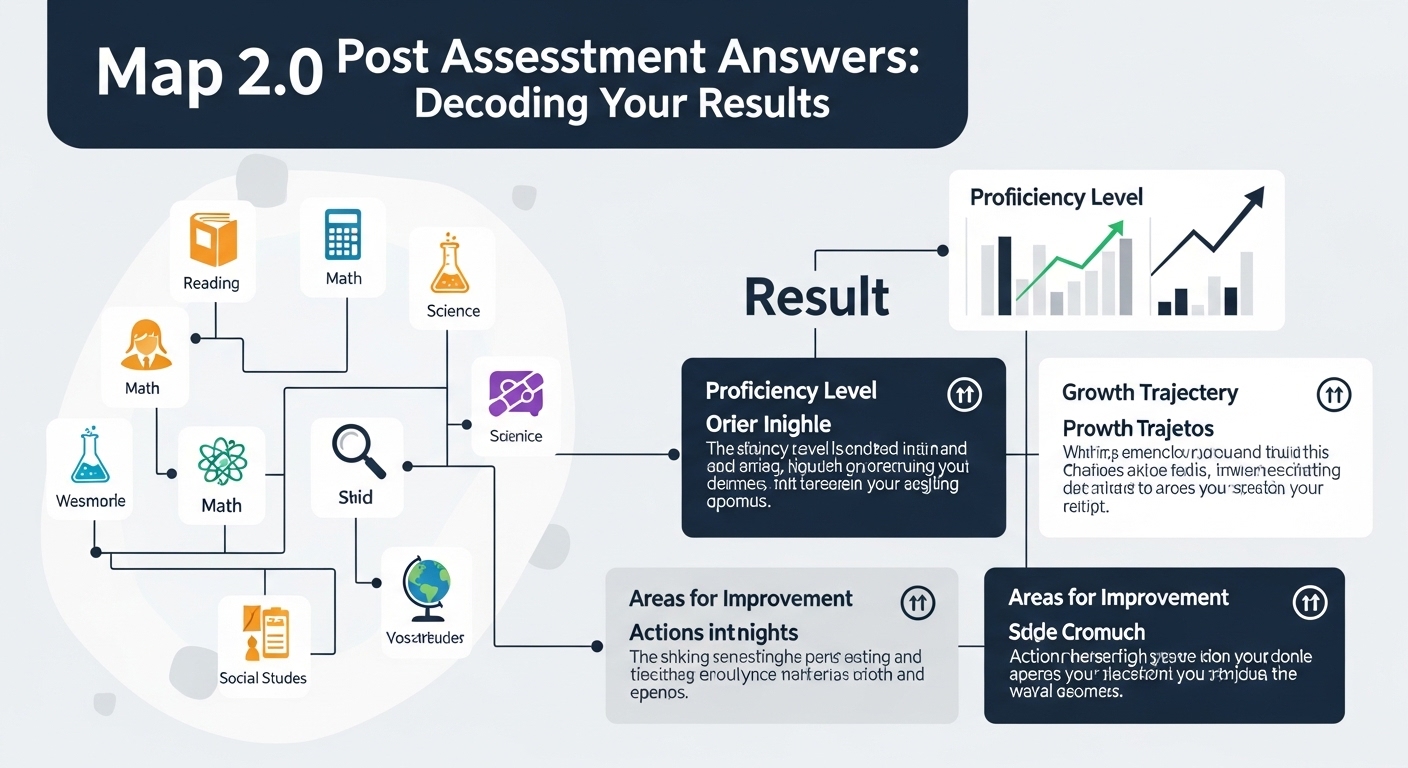
In the evolving landscape of education and professional development, the MAP 2.0 post assessment answers have emerged as a critical tool for understanding learning outcomes and driving improvement. For educators, administrators, and tech-savvy professionals, these assessments provide actionable insights that go beyond traditional grading systems. They help pinpoint strengths, identify gaps, and inform strategies that maximize both student and organizational performance.
Understanding MAP 2.0 Post Assessment
The MAP 2.0 post assessment is designed to measure growth over time. Unlike conventional assessments that provide a snapshot of current knowledge, MAP 2.0 focuses on longitudinal learning, tracking how skills and comprehension develop after instruction or intervention. This makes it invaluable for teachers seeking to refine curricula and for startups in edtech aiming to deliver measurable results.
The post assessment answers serve a dual purpose: they verify understanding while offering benchmarks against which future learning can be compared. By analyzing these answers, stakeholders gain clarity on which concepts have been mastered and which require further attention.
How MAP 2.0 Post Assessment Drives Learning Outcomes
At the heart of MAP 2.0 is its ability to translate raw assessment data into meaningful insights. This is achieved through adaptive testing, predictive analytics, and actionable reporting. Students or employees are evaluated not just on rote memorization but on applied understanding, critical thinking, and problem-solving.
Key Advantages of MAP 2.0 Post Assessment
| Feature | Benefit | Real-World Impact |
| Adaptive Questioning | Tailors difficulty to individual ability | Provides accurate measurement of growth |
| Growth Tracking | Measures progress over time | Helps educators and managers identify trends |
| Detailed Reporting | Offers insights on strengths and weaknesses | Supports personalized learning strategies |
| Predictive Analytics | Projects future performance | Guides instructional planning and resource allocation |
These features make MAP 2.0 post assessment answers not just a reflection of performance but a guide for informed decision-making.
Practical Relevance for Educators and Leaders
For teachers, understanding MAP 2.0 post assessment answers allows them to customize instruction, target intervention, and optimize classroom time. For example, a reading comprehension post-assessment might reveal that certain students excel in vocabulary but struggle with inference skills. With this information, educators can adapt lesson plans, group activities, or personalized tutoring sessions to maximize learning outcomes.
In corporate or professional learning environments, the post assessment answers can serve a similar purpose. Training programs, workshops, or skill-building initiatives benefit from clear feedback on which concepts have been internalized and which require reinforcement. This ensures that investments in training translate into measurable performance improvements.
Common Misconceptions About MAP 2.0 Post Assessment Answers
Despite its widespread use, several misconceptions surround the MAP 2.0 post assessment answers:
- It’s Just a Test: MAP 2.0 is more than a static exam—it’s a dynamic tool that evolves with each user’s responses.
- Scores Are Final: The answers highlight learning trends rather than providing an unchangeable judgment.
- It Replaces Teacher Insight: Instead, it complements human expertise, providing data that informs professional decisions.
Recognizing these nuances ensures that MAP 2.0 is used effectively to enhance, not replace, instructional or training efforts.
How to Use MAP 2.0 Post Assessment Answers Effectively
- Analyze Trends, Not Just Scores – Look for patterns in performance across topics and skills.
- Integrate Feedback Into Planning – Use insights to tailor instruction, coaching, or professional development.
- Combine With Other Data – Consider classroom performance, engagement metrics, and qualitative feedback for a holistic understanding.
- Regularly Reassess – Continuous evaluation helps track growth and adjust strategies dynamically.
Applying these approaches ensures that the post assessment answers become a strategic tool rather than just a static report.
The Technology Behind MAP 2.0
MAP 2.0 leverages modern edtech frameworks that integrate adaptive testing, AI-powered analytics, and interactive reporting dashboards. Each post assessment answer is evaluated not only for correctness but also for patterns in reasoning, speed, and approach. This nuanced analysis allows educators and organizations to differentiate instruction and support, ensuring that learners are challenged appropriately while receiving guidance where needed.
The Broader Impact
The true value of MAP 2.0 post assessment answers extends beyond individual learners. When aggregated, the data provides insights into curriculum effectiveness, instructional strategies, and organizational learning outcomes. For schools, districts, or corporate training departments, this data can inform decisions about resource allocation, program design, and professional development initiatives.
In short, MAP 2.0 post assessment answers create a feedback loop: they inform instruction, drive learning, and generate actionable insights that improve future performance.
Conclusion
MAP 2.0 post assessment answers are more than just solutions to test questions—they are a gateway to understanding, optimizing, and accelerating learning outcomes. For educators, tech innovators, and organizational leaders, leveraging these insights transforms raw data into strategic action, ensuring growth, engagement, and measurable success. By using the answers thoughtfully, stakeholders can empower learners, enhance curricula, and make informed decisions that drive lasting impact.