
 By admin@bigwritehook.com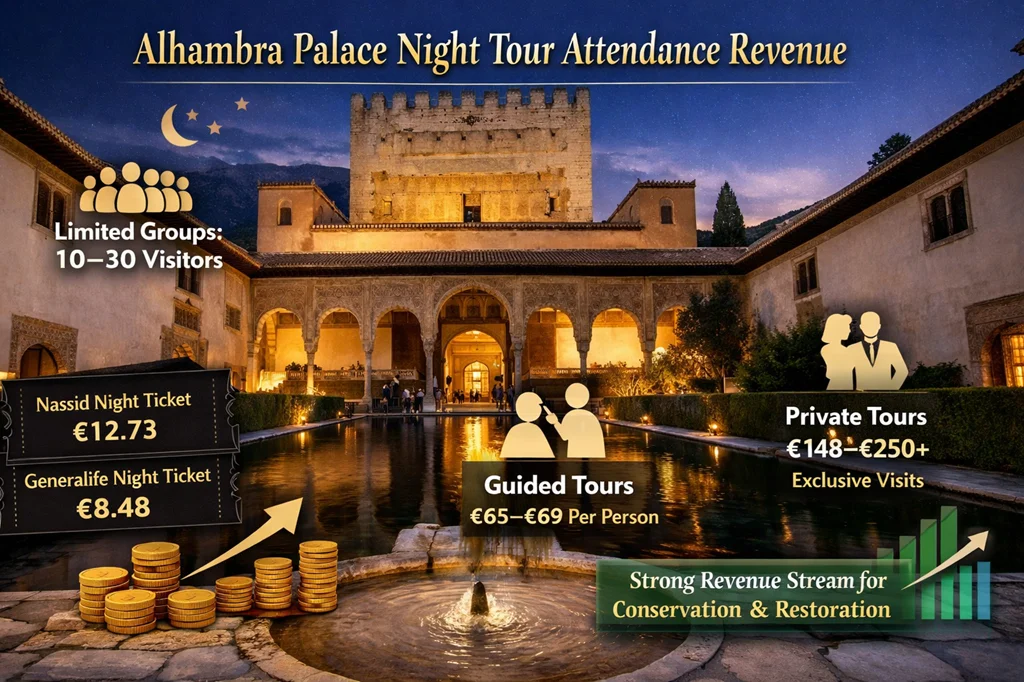
The Alhambra night tours Granada annual attendance revenue is more than a statistic—it’s a dynamic indicator of how cultural heritage, tourism economics, and experience‑driven travel intersect in one of Europe’s most iconic destinations. While the Alhambra’s daytime visits have long drawn millions, the emerging popularity of night tours is reshaping not just attendance patterns, but also the revenue streams that sustain conservation, local economies, and the broader Granada tourism ecosystem. Understanding how evening visits contribute to the Alhambra’s annual revenue offers invaluable insight for startup founders, digital strategists, and hospitality innovators exploring experiential tourism as a growing market segment.
In this article, we explore the nuances of night‑tour attendance, how much revenue these tours generate, their economic impact beyond ticket sales, and what this means for both cultural heritage management and Granada’s broader economic landscape.
What the “Alhambra Night Tours Granada Annual Attendance Revenue” Really Represents
At first glance, the phrase Alhambra night tours Granada annual attendance revenue may seem like a technical tourism metric. But unpacked, it reflects a series of deliberate choices—limiting access, enhancing visitor experience, and leveraging scarcity to create a premium offering.
The Alhambra, a UNESCO World Heritage site, welcomes millions of visitors annually. Of this total, evening tours represent a controlled segment, with attendance figures typically between approximately 120,000 and 150,000 people per year. This accounts for roughly 5–6% of the total visitor volume—a much smaller slice compared to daytime admissions, but one that plays an outsized role in revenue generation and visitor satisfaction.
Night tours are intentionally limited to protect the site’s integrity while offering a unique atmosphere that differs from the daytime experience. This exclusivity enhances the perceived value of the tour and allows the Patronato de la Alhambra y Generalife (the institution managing the site) to allocate valuable evening slots to visitors willing to pay a premium for a quieter, more intimate exploration of the monuments.
Attendance Trends: Who Visits and When
Night tour attendance peaks during the tourist season from April through October, when warmer evenings and longer daylight hours encourage visitors to extend their time in Granada. During these months, nightly attendance can reach an estimated 400–500 guests for combined Nasrid Palace and garden tours. In shoulder and off‑season months, attendance dips to around 200–300 visitors per evening.
Despite being a smaller proportion of total visitors, night tours enjoy consistently strong demand—often at 60–70% capacity—indicating potential for further growth within preservation constraints.
The demographics also vary slightly from daytime crowds. International tourists—particularly from Europe and North America—tend to favor night tours more heavily, often planning evening visits to coincide with romantic or immersive travel experiences. This behavior underscores not only a cultural desire for unique experiences but also a willingness to spend more per visitor when the moment feels exclusive.
How Attendance Translates Into Revenue
Estimating the Alhambra night tours Granada annual attendance revenue requires understanding ticket pricing, ancillary spending, and visitor behavior patterns. While official public financial data rarely isolates night‑tour revenue from overall ticketing income, analysts and tourism observers converge on similar figures:
- Night tour attendance: ~120,000–150,000 visitors per year
- Estimated annual night‑tour revenue: ~€8–€12 million
- Share of total Alhambra revenue: ~15–20%
This projected figure is based on a mix of standard night tour ticket prices (commonly between €8 and €13 depending on the area and season), premium guided options, and ancillary sales like audio guides or bundled tours with special access.
Comparatively, daytime tours attract the bulk of total visitors, with annual daytime revenue estimated around €45–€50 million, underscoring just how significant night tours have become despite their smaller attendance share.
A simplified table below illustrates the attendance and revenue split between daytime and night tours:
| Tour Type | Annual Visitors | Revenue Contribution | Typical Ticket Range |
| Daytime visits | ~2.5–2.7 million | €45–€50 million | ~€22 (standard) |
| Night tours | ~120,000–150,000 | €8–€12 million | €8–€13 (standard), €15–€20+ (guided) |
| Night tours share | ~5–6% of visits | ~15–20% of revenue | — |
Sources: estimates from industry analysis and tourism data
Beyond Tickets: Broader Economic Impact
The financial significance of night tours extends far beyond direct ticket sales. Evening visits encourage longer stays in Granada, boosting local spending in hospitality, dining, and transportation. According to tourism analyses, night‑tour visitors tend to spend around 20% more on local services than daytime visitors because of dinner outings and overnight stays connected with the experience.
This spillover effect has a meaningful impact on Granada’s broader economy, supporting hotels, restaurants, taxi services, and cultural venues that thrive on evening tourism. In a city where heritage tourism remains a central economic pillar, night tours reinforce Granada’s position as a destination that balances cultural preservation with commercial sustainability.
Operational and Strategic Roles of Night Tours
From a management perspective, the Alhambra’s approach to night tours is both strategic and sustainable. Because night tours can charge premium prices for limited slots, they offer higher profit margins per visitor—even though operational hours are shorter and services more focused than daytime operations.
Revenue from night tours is reinvested directly into site maintenance, conservation projects, and educational initiatives. Roughly:
- 40% covers operational costs, including lighting, staffing, and security,
- 30% funds conservation and restoration, and
- 30% supports educational programs and infrastructure improvements.
This allocation underscores the role of night tours not just as a revenue stream but as a financial pillar for preserving the Alhambra’s physical and cultural heritage.
Future Trends and Projections
Looking ahead, analysts expect the Alhambra night tours Granada annual attendance revenue to continue growing. Forecasts suggest night tour revenues could climb toward €15–€18 million annually by 2027, driven by expanded offerings such as “moonlight palace” experiences, dynamic pricing strategies, and technology integrations like virtual reality enhancements that boost interest from both domestic and international visitors.
These innovations aim to convert daytime interest into evening attendance, diversify tour packages, and attract new segments of tourists willing to pay premium pricing for enriched cultural engagement.
Conclusion: Why Night Tours Matter Beyond the Numbers
The story of Alhambra night tours Granada annual attendance revenue is not just about ticket sales or tourism figures. It reflects a broader evolution in how heritage sites generate sustainable income, manage visitor experiences, and support local economies. By balancing exclusivity, cultural value, and operational strategy, night tours have carved out a meaningful contribution to the Alhambra’s overall financial and cultural ecosystem.
For startup founders and digital innovators exploring experience‑led tourism or scalable cultural products, the Alhambra’s model offers lessons in how niche offerings—when priced, marketed, and managed thoughtfully—can unlock disproportionately high value. Night tours demonstrate how quality over quantity, strategic scarcity, and aligned economic incentives can drive both preservation and profitability.
In a world where travelers increasingly seek unique, memorable experiences, night tours at iconic destinations like the Alhambra underline the commercial potential of reimagining when and how people connect with culture. They are not just evening visits—they are meaningful drivers of economic and cultural sustainability.