 By IQnewswire IQnewswire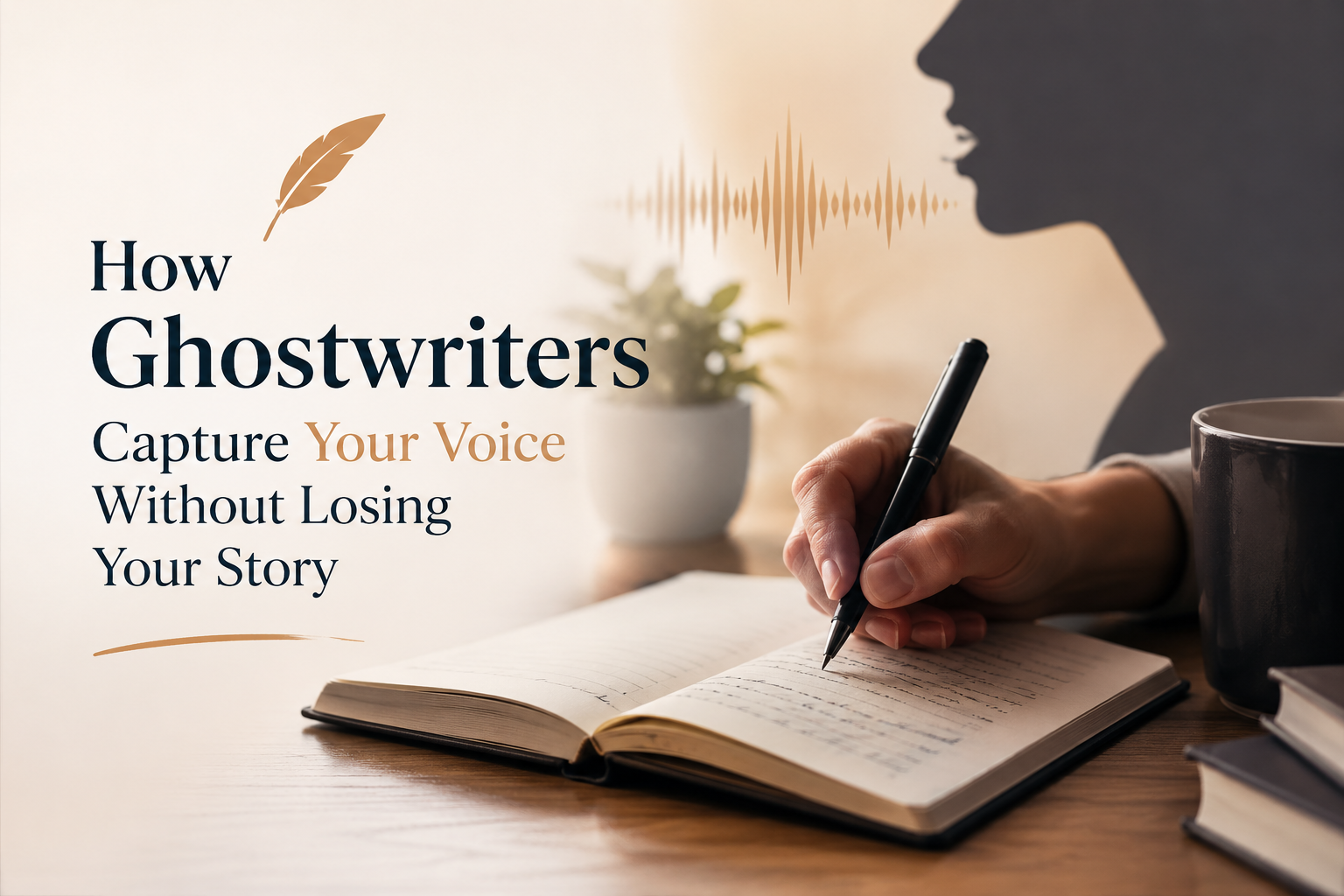
Imagine you sat down with someone for three hours and told them everything. The story you have been carrying around for years. The parts you have never said out loud before. The version of events you have always wanted someone to understand properly. Now imagine they went away and came back six weeks later with a manuscript.
You read the first page and something feels slightly off. The words are good. The structure makes sense. But it does not sound like you. It sounds like a capable writer’s best impression of you, which is close but not the same thing.
This is the single most common experience people have with ghostwriting, and it almost always comes from a misunderstanding of what good ghostwriting actually involves. The popular conception is that the ghost writes the book and the author receives something finished. The reality is that what gets delivered first is not the book. It is a mirror. And what happens next is the actual work.
A ghostwriter does not invent your voice. They excavate it. The process is closer to archaeology than to authorship. The ghost listens to how you speak, notes what you repeat, pays attention to what you skip over, and slows down specifically at the moments where you light up mid-sentence. Those moments, the ones where your energy changes and your words start coming faster, are the ones that contain the real material. The analytical brain has usually filed them away as unimportant. They are almost always the opposite.
So what does that actually look like in practice?
The discovery process matters more than the writing process. Before a word of the manuscript gets written, a ghost worth working with spends significant time not writing anything at all. They are mapping the voice. The rhythm of how you speak. Whether you tend toward long discursive sentences or short ones. Whether you use humour as punctuation or hold it back for specific moments. Whether you tell stories by starting in the middle and working outward or by building carefully from the beginning. All of that is data that shapes every sentence of the manuscript.
The first draft gets produced. The author reads it and reacts. Not “this does not sound right” but specifically: “I would never say it that way. I would say it more like this.” Those specific reactions are not problems with the draft. They are the most valuable material in the entire process. They tell the ghost exactly where the approximation fell short of the real thing, and from there the revision is not about fixing errors. It is about closing the distance.
This is why the first draft is the mirror. The author who reads it and has strong reactions to what does not sound like them has just discovered something about their own voice that they could not have articulated before seeing the wrong version of it. That discovery is what makes the second draft the beginning of the actual book.
For romance ghostwriting services specifically, this process is more demanding than in almost any other genre, because romance readers are among the most genre-literate audiences in publishing. They know within pages when a voice does not feel genuinely inhabited. The warmth, the interiority, the specific way the narrator relates to the emotional centre of the story: all of it has to feel real rather than approximated. Ghostwritten romance that works is the kind where the ghost disappeared so completely into the author’s voice that the seam is invisible. Getting there requires the mirror process working fully in both directions.
Romance book editors for hire at the manuscript level serves a similar function. A skilled romance editor reads not just for craft and consistency but for whether the emotional register stays true throughout. Where the voice slips into something more generic. Where a scene that should feel intimate reads instead as observed from a distance. These are the places where the distance between the author’s real voice and the written version of it has opened up, and catching them is exactly what the editorial process is designed to do.
Here is the twist that most people do not expect going into a ghostwriting relationship. The authors who get the best results are not the ones who step back and let the ghost handle everything. They are the ones who stay fiercely engaged. Who read early drafts the same week they arrive. Who react specifically and honestly to what does and does not sound like them. Who understand that the collaboration is not about approval but about refinement.
The ghost brings the craft. The author brings the voice. Neither one produces the book alone. But together, given enough honest conversation and enough drafts, they produce something that sounds exactly like the author at their most articulate, telling the story they always meant to tell, in the way they always meant to tell it.